
AV SYSTEM
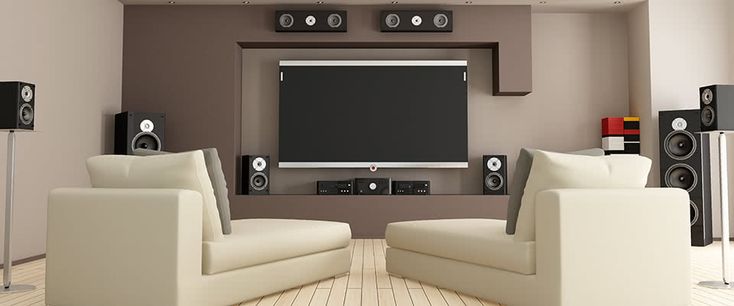
Audio/Video
Audiovisual (AV) is electronic media possessing both a sound and a visual component, such as slide-tape presentations,[1] films, television programs, corporate conferencing, church services, and live theater productions.
Audiovisual service providers frequently offer web streaming, video conferencing, and live broadcast services.
Computer-based audiovisual equipment is often used in education, with many schools and universities installing projection equipment and using interactive whiteboard technology.
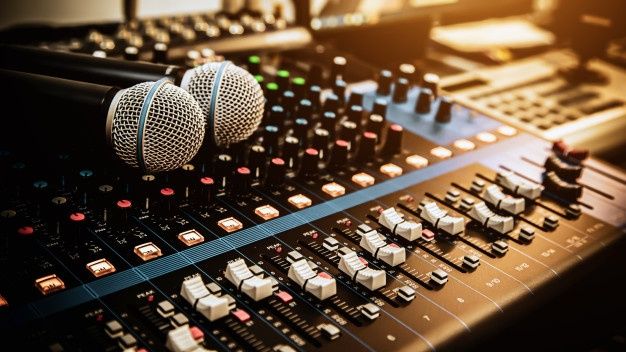
Microphone & Mixing Console
Microphones enable many types of audio recording devices for purposes including communications of many kinds, as well as music vocals, speech and sound recording.
Mixing consoles are used for applications including recording studios, public address systems, sound reinforcement systems, nightclubs, broadcasting, and post-production. A typical, simple application combines signals from microphones on stage into an amplifier that drives one set of loudspeakers for the audience. A DJ mixer may have only two channels, for mixing two record players.
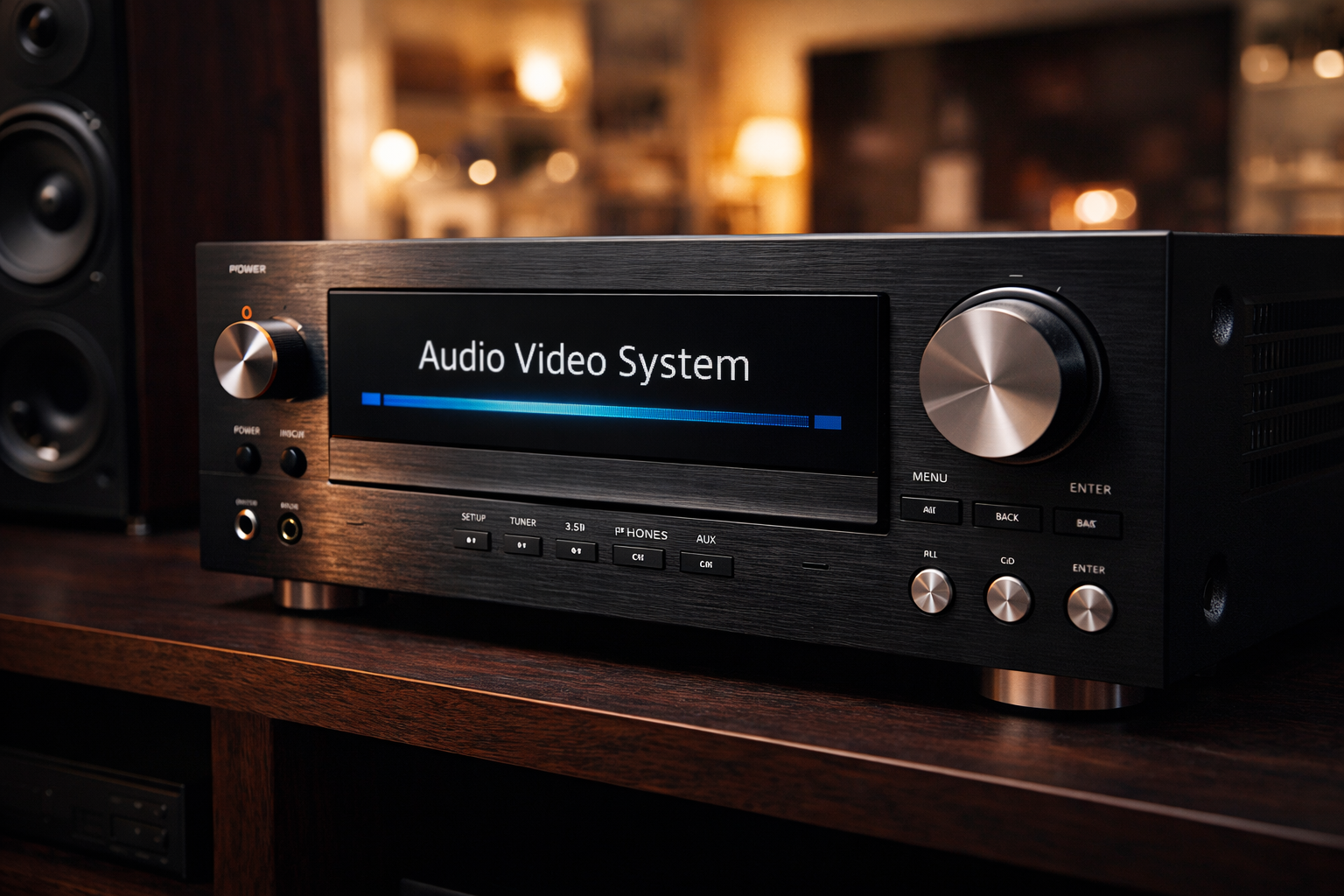
AMPLIFIER
Main Functions:
- Audio Amplification – Increases low-level audio signals to a level powerful enough to drive speakers.
- Source Switching – Allows selection between multiple inputs (HDMI, AUX, Bluetooth, USB, etc.).
- Audio Processing – Supports surround sound formats (e.g., Dolby/DTS), equalization, and sound modes.
- Video Switching & Pass-through – Routes video signals to a TV or projector without loss of quality.
Control Hub – Acts as the central unit of a home theater or commercial AV system.
Common Applications:
- Home theater systems
- Conference rooms
- Auditoriums
- Public address systems
- Educational institutions